
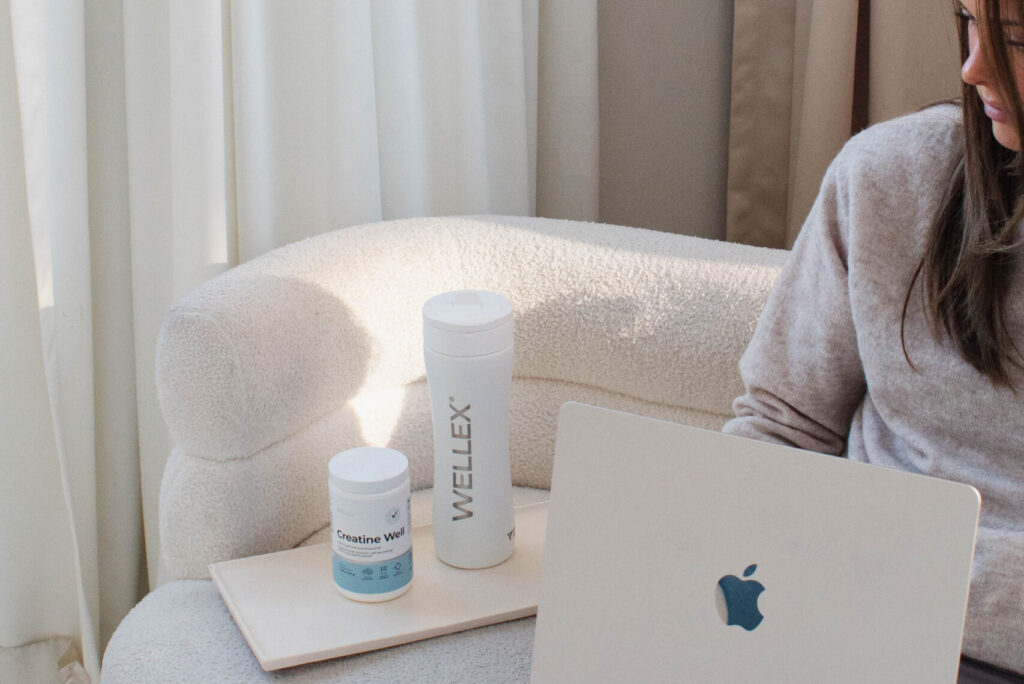

Creatine for Women: What It Really Does for Strength, Energy, and Brain Health
For years, creatine lived firmly in the “men’s supplement” category.
Gym bags.
Shakers.
Muscle magazines.
Meanwhile, women were navigating a very different set of demands.
Building careers.
Training harder than previous generations.
Balancing work, family, and recovery.
Managing stress, sleep disruption, and hormonal shifts.
And yet, creatine was rarely part of the conversation.
Today we know creatine supports far more than muscle — including brain energy, cellular metabolism, recovery, and cognitive performance.
Creatine is also one of the most extensively studied supplements in modern nutrition science, with more than 1,000 studies examining its effects on energy metabolism, performance, and cellular health.
This guide explores what creatine actually does in a woman’s body – and why it may matter from your 20s through midlife and beyond.
Creatine is a naturally occurring compound derived from amino acids. Your body stores creatine in tissues with high energy demand, including:
Its primary role is simple but essential.
Creatine helps regenerate ATP (adenosine triphosphate) — the molecule your cells use as immediate fuel.
When ATP levels drop, cellular performance declines. And that performance isn’t limited to lifting weights.
ATP powers:
Creatine supports the energy system that allows all of these processes to function.
Although the brain represents only ~2% of body weight, it consumes about 20% of the body’s total energy.
Efficient cellular energy production is essential for cognitive performance.
Women naturally store less creatine than men — roughly 70–80% lower relative to body mass.
These levels can also be influenced by:
Because creatine supports cellular energy production, these differences may influence both physical and cognitive energy systems.
Across life stages, women often experience shifts in how their energy is used.
These are not diagnoses. They are reflections of evolving physiological demands.
Creatine works at the level where many of these changes begin: cellular energy metabolism.

One of the most common misconceptions about creatine is that it causes bulky muscle.
Creatine does not change body composition on its own.
Instead, it increases the availability of ATP inside muscle cells, which can support:
Muscle tone in women is primarily influenced by:
Creatine simply supports the energy system that allows those adaptations to occur.
Meta-analyses show creatine supplementation combined with resistance training can increase strength by 5-15% on average.
Creatine is not stored only in muscle.
The brain relies heavily on ATP to support cognitive performance.
Emerging research suggests creatine may support:
Systematic reviews suggest creatine supplementation may improve aspects of memory and reasoning, particularly during periods of mental fatigue or sleep deprivation.
Many women describe experiences such as:
These shifts are complex and multifactorial. But cellular energy availability is part of the equation.
Most creatine supplements focus solely on muscle performance.
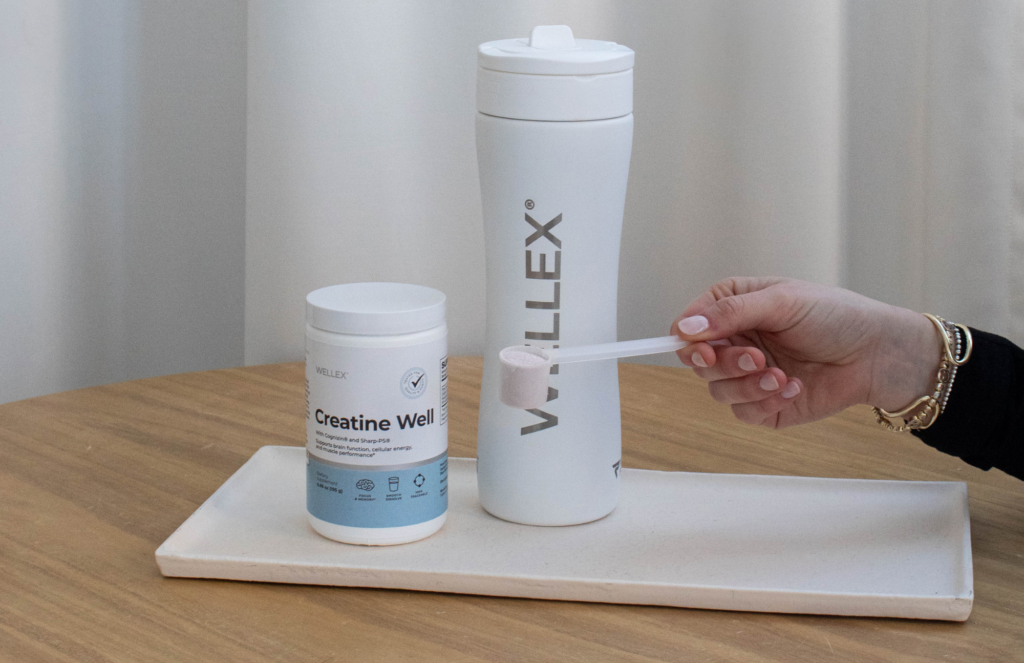
Creatine Well was designed to support both brain and body energy systems.
In addition to ultra-pure creatine monohydrate, the formula includes two patented nutrients studied for their role in brain health:
• Cognizin® (citicoline)
• Sharp•PS® (phosphatidylserine)
These nootropics play roles in:
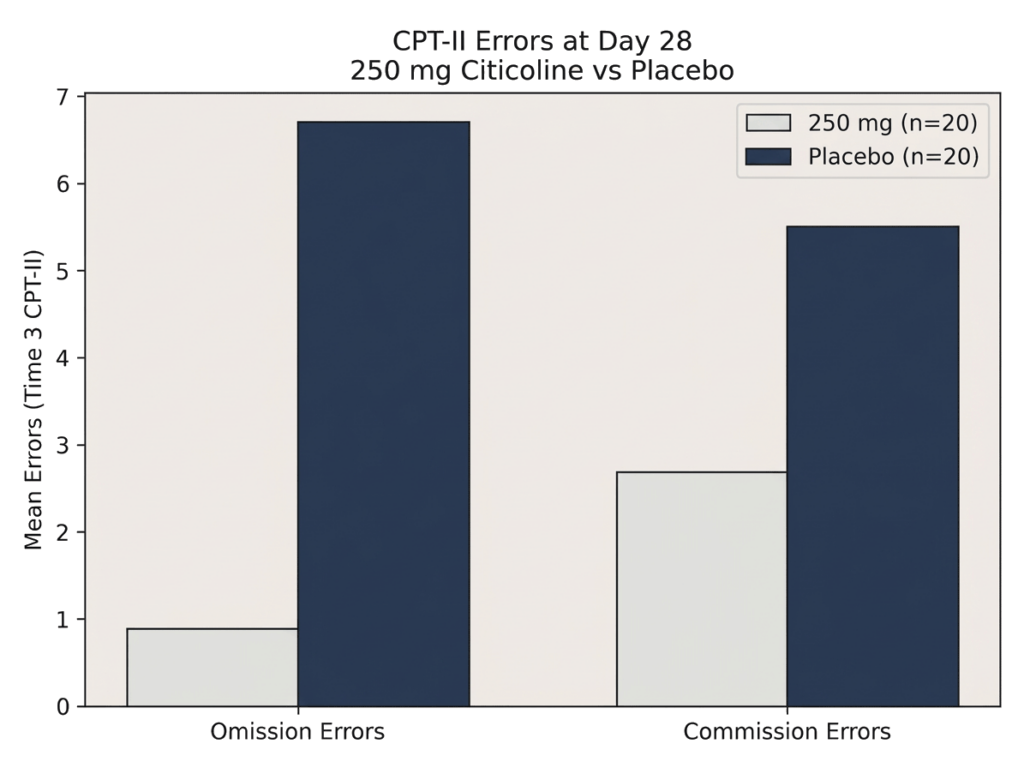
Sharp•PS® Clinical Research Results
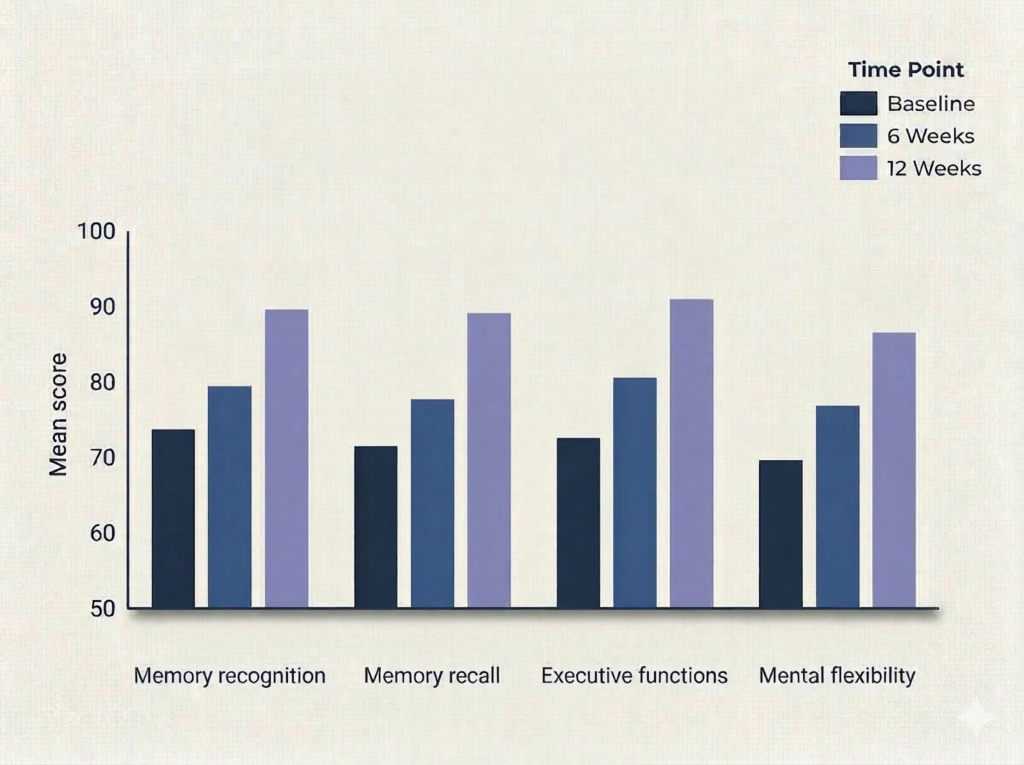
Together, these nutrients support complementary aspects of brain physiology.
Creatine fuels the energy system.
Citicoline and phosphatidylserine support cell structure and signaling.
The result is a more complete approach to brain and body energy.
Most research supports a daily intake of:
This recommendation comes from body-weight–based research suggesting approximately:
0.1 g per kilogram of body weight per day.
For most women, this equals 3–5 grams daily.
Higher doses are sometimes used during short “loading phases,” but loading is not always necessary.
Consistency matters more than intensity.
Creatine timing is flexible. Research shows the primary factor for effectiveness is consistent daily intake, not exact timing.
Many women choose to take creatine:
Because creatine works by gradually saturating tissue stores, daily consistency is what matters most.
Creatine works by gradually increasing creatine stores in muscle and brain tissue.
Without a loading phase, most individuals reach full tissue saturation within 3–4 weeks.
Many women begin noticing improvements in:
within 4–8 weeks of consistent use.
Creatine quality varies significantly between manufacturers.
Creatine synthesis requires careful control of:
When production shortcuts occur, contaminant levels can increase. This is why third-party testing and impurity screening matter.
Pürest Creatine™, used in Creatine Well, is selected for:
– ultra-low impurity levels
– third-party verification
– strict European purity standards
For routine daily support, the chemistry of purity is essential.
(insert purity graph)
Myth: Creatine causes bloating
Fact: Mild water retention can occur during high-dose loading phases (which is not necessary), but moderate daily doses rarely cause noticeable bloating.
Myth: Creatine is only for bodybuilders
Fact: Creatine supports cellular energy in both muscle and brain tissue.
Myth: Creatine causes fat gain
Fact: Creatine does not increase body fat.
Myth: Creatine must be cycled
Fact: Research supports continuous daily use.
Myth: If you eat well, you don’t need creatine
Fact: Even well-balanced diets may not fully saturate creatine stores, particularly in individuals who eat limited red meat.
Women who:
Individuals who:
Women’s energy demands evolve but across every life stage, the goal remains the same:
Supporting the biological systems that allow you to think clearly, move well, and recover effectively.
Creatine supports one of the most fundamental systems in the body: cellular energy.
And when energy systems are well supported, the rest of physiology has a stronger foundation to build on.
Kreider RB, Kalman DS, Antonio J, et al.
International Society of Sports Nutrition position stand: safety and efficacy of creatine supplementation in exercise, sport, and medicine.
Journal of the International Society of Sports Nutrition. 2017;14:18.
https://doi.org/10.1186/s12970-017-0173-z
Antonio J, Candow DG, Forbes SC, et al.
Common questions and misconceptions about creatine supplementation: what does the scientific evidence really show?
Journal of the International Society of Sports Nutrition. 2021;18:13.
https://doi.org/10.1186/s12970-021-00412-w
Candow DG, Chilibeck PD, Forbes SC.
Creatine supplementation and aging musculoskeletal health.
Nutrients. 2019;11(8):1713.
https://doi.org/10.3390/nu11081713
Chilibeck PD, Kaviani M, Candow DG, Zello GA.
Effect of creatine supplementation during resistance training on lean tissue mass and muscular strength in older adults: a meta-analysis.
Open Access Journal of Sports Medicine. 2017;8:213–226.
https://doi.org/10.2147/OAJSM.S123529
Rawson ES, Venezia AC.
Use of creatine in the brain: clinical implications.
Amino Acids. 2011;40(5):1343–1362.
https://doi.org/10.1007/s00726-011-0850-0
Avgerinos KI, Spyrou N, Bougioukas KI, Kapogiannis D.
Effects of creatine supplementation on cognitive function of healthy individuals: a systematic review of randomized controlled trials.
Experimental Gerontology. 2018;108:166–173.
https://doi.org/10.1016/j.exger.2018.04.013
Dolan E, Gualano B, Rawson ES.
Beyond muscle: the effects of creatine supplementation on brain creatine, cognitive processing, and mental health.
Nutrients. 2019;11(3):586.
https://doi.org/10.3390/nu11030586
McMorris T, Harris RC, Swain J, et al.
Effect of creatine supplementation and sleep deprivation on cognitive performance.
Psychopharmacology. 2006;185(1):93–103.
https://doi.org/10.1007/s00213-005-0269-2
Raichle ME, Gusnard DA.
Appraising the brain’s energy budget.
Proceedings of the National Academy of Sciences. 2002;99(16):10237–10239.
https://doi.org/10.1073/pnas.172399499
Smith-Ryan AE, Cabre HE, Eckerson JM, et al.
Creatine supplementation in women’s health: a lifespan perspective.
Nutrients. 2021;13(3):877.
https://doi.org/10.3390/nu13030877
Forbes SC, Candow DG, Ferreira LH, et al.
Creatine supplementation in women’s health: implications across the lifespan.
Nutrients. 2022;14(21):4535.
https://doi.org/10.3390/nu14214535
Smith-Ryan AE, Hirsch KR, Blue MNM, et al.
Creatine supplementation in women: considerations for performance and health.
Frontiers in Nutrition. 2022;9:903318.
https://doi.org/10.3389/fnut.2022.903318
McGlade E, Locatelli A, Hardy J, et al.
Improved attentional performance following citicoline administration in healthy adult women.
Food and Nutrition Sciences. 2012;3:769–773.
https://doi.org/10.4236/fns.2012.36099
Alvarez XA, Mouzo R, Pichel V, et al.
Double-blind placebo-controlled study with citicoline in age-associated memory impairment.
Clinical Interventions in Aging. 2015;10:789–798.
https://doi.org/10.2147/CIA.S75790
Richter Y, Herzog Y, Lifshitz Y, Hayun R, Zchut S.
The effect of soy-derived phosphatidylserine on cognitive performance in elderly with subjective memory complaints.
Journal of Human Nutrition and Dietetics. 2010;23(1):90–98.
https://doi.org/10.1111/j.1365-277X.2009.01016.x
Kingsley MI, Miller MG, Kilduff LP, et al.
Effects of phosphatidylserine supplementation on exercise capacity during cycling in active males.
Journal of the International Society of Sports Nutrition. 2006;3:41–48.
Neurodegenerative disease
Bender A, Koch W, Elstner M, Schombacher Y, Bender J, Moeschl M, Gekeler F, Müller-Myhsok B, Gasser T, Tatsch K, Klopstock T.
Creatine supplementation in Parkinson disease: A placebo-controlled randomized pilot trial.
Neurology. 2006;67(7):1262–1264.
https://pubmed.ncbi.nlm.nih.gov/17030762/
Mental health
Lyoo IK, Yoon S, Kim TS, Hwang J, Kim JE, Won W, Bae S, Renshaw PF.
A randomized, double-blind placebo-controlled trial of oral creatine monohydrate augmentation for enhanced response to a selective serotonin reuptake inhibitor in women with major depressive disorder.
American Journal of Psychiatry. 2012;169(9):937–945.
https://doi.org/10.1176/appi.ajp.2012.12010009
Sleep loss mitigation
Gordji-Nejad A, Matusch A, Kleedörfer S, Patel HJ, Drzezga A, Elmenhorst D, Binkofski F, Bauer A.
Single dose creatine improves cognitive performance and induces changes in cerebral high energy phosphates during sleep deprivation.
Scientific Reports. 2024;14:4937.
https://doi.org/10.1038/s41598-024-54249-9
Recovery and inflammation
Deminice R, Rosa FT, Franco GS, Jordao AA, de Freitas EC.
Effects of creatine supplementation on oxidative stress and inflammatory markers after repeated-sprint exercise in humans.
Nutrition. 2013;29(9):1127–1132.
https://doi.org/10.1016/j.nut.2013.03.003
Hormonal transition / female lifespan
Smith-Ryan AE, Cabre HE, Eckerson JM, Candow DG, Forbes SC.
Creatine supplementation in women’s health: A lifespan perspective.
Nutrients. 2021;13(3):877.
https://doi.org/10.3390/nu13030877


Photodynamic therapy is a treatment typically used in the treatment of acne, warts, and a range of cancers, including mouth (oral), head and neck, lung,

The HPV Infection: Do I Have It? But…I’ve never noticed any symptoms so I couldn’t have gotten an HPV infection? Most strains of HPV are low-risk strains that

Are you worried about HPV? Are you unclear as to what exactly HPV is? We at Papillex understand your concerns. HPV can be scary! That’s

Human beings are naturally programmed to eat foods that are healing and beneficial for our bodies. However, we all know that it isn’t always easy
Check out our shop to see what's available
Easy Delivery. Effortless Wellness.
Subscribe for:
By signing up for a Wellex subscription, you authorize use of the credit card you have on file and shipping at the frequency you have selected. Rest assured you can change or cancel at any time.