
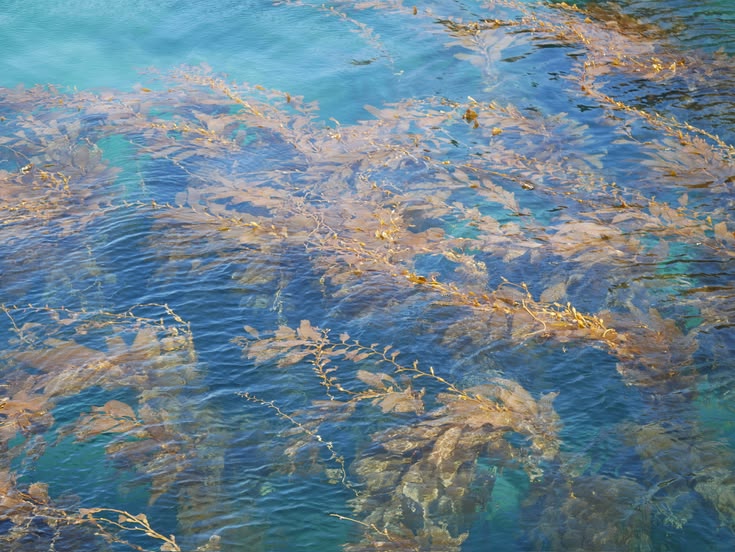

Nature has developed remarkably different defense systems across different environments.
In the ocean, seaweeds such as Irish moss and kelp contain complex carbohydrates known as sulfated polysaccharides. On land, medicinal mushrooms contain their own biologically active polysaccharides, including beta-glucans.
Although these compounds come from very different ecosystems, researchers have become increasingly interested in how both may influence the body’s response to viral infections.
The interesting part is that they appear to work in different ways.
Laboratory research suggests certain sea-derived sulfated polysaccharides may interact more directly with viruses, including by interfering with viral attachment and entry into host cells.²⁻⁴ Mushroom-derived beta-glucans, meanwhile, are primarily studied for their ability to interact with the immune system and support immune-cell activity.⁵,⁶
This creates an interesting Sea + Land Biome approach to immune support: bringing together compounds from two distinct natural environments that influence different biological pathways.
Here’s what the current research tells us.
Polysaccharides are complex carbohydrates composed of chains of sugar molecules.
Certain seaweeds are particularly rich in sulfated polysaccharides, meaning sulfate groups are attached to their carbohydrate structures. Researchers believe these structural characteristics contribute to many of their biological activities.¹,²
Examples include:
Marine sulfated polysaccharides have been investigated for a wide range of biological effects, including immune modulation, antioxidant activity, healthy inflammatory responses, and antiviral activity.¹⁻⁴
Of particular interest is how some of these compounds may interact with viruses during the earliest stages of infection.
To infect a cell, herpes simplex virus (HSV) must first attach to the surface of a host cell and then gain entry.
This early stage of infection has become an important area of research for marine polysaccharides.
Laboratory and animal studies suggest certain sulfated polysaccharides may:
Carrageenans, for example, have demonstrated anti-HSV activity in laboratory research. Their negatively charged sulfate groups may interact with viral surface proteins and interfere with the ability of HSV to attach to host cells.³
Fucoidans derived from brown seaweed have also been investigated in experimental HSV models. Research suggests their activity may involve both interference with viral infection and effects on host immune responses.¹,²
These findings are promising, but there is an important limitation:
Most of the evidence comes from laboratory and preclinical research rather than large human clinical trials.
That means marine sulfated polysaccharides should be viewed as an emerging area of HSV research rather than established treatments for herpes infections.
The land side of the story works differently.
Medicinal mushrooms contain biologically active polysaccharides known as beta-glucans.
Beta-glucans are found in the cell walls of many fungi and have been extensively investigated for their effects on immune function.⁵,⁶
Rather than primarily being studied for blocking viral attachment, mushroom beta-glucans are best known for interacting with the body’s immune system.
Beta-glucans can interact with pattern-recognition receptors on immune cells, including:
These interactions can influence the activity of macrophages, dendritic cells, neutrophils, and other components of the innate and adaptive immune response.⁵,⁶
This distinction is important.
Sea-derived sulfated polysaccharides are being studied for their potential interactions with viruses themselves, while mushroom-derived beta-glucans are primarily being studied for how they influence the host immune response.
HSV behaves differently from viruses that simply enter the body, replicate, and disappear.
Following the initial infection, HSV establishes lifelong latency within sensory nerve cells. Between outbreaks, the virus remains dormant and can later reactivate.
The immune system plays an important role in maintaining control over latent viral infections.
That is why researchers are interested not only in compounds that may interfere with stages of viral infection, but also in compounds capable of influencing immune surveillance and immune-cell activity.
Mushroom-derived beta-glucans have been studied extensively in this context.
Research suggests beta-glucans interact with receptors such as Dectin-1 and CR3, initiating signaling pathways involved in innate immune responses.⁵,⁶ These interactions can influence macrophages, dendritic cells, neutrophils, and other immune cells involved in recognizing and responding to pathogens.
Current evidence supports viewing them as immune-modulating compounds whose biological activity may be relevant to the broader immune response.
Looking at these ingredients together reveals an interesting distinction.
Sulfated polysaccharides found in marine algae, including fucoidans and carrageenans, have demonstrated antiviral activity in experimental research.
For HSV specifically, researchers have observed effects involving some of the earliest stages of viral infection, including attachment and entry into host cells.²⁻⁴
Mushroom-derived beta-glucans work through a different pathway.
Rather than relying on the same direct interaction with viral attachment, beta-glucans are primarily recognized for their ability to interact with immune receptors and influence innate and adaptive immune responses.⁵,⁶
Together, these areas of research illustrate why looking beyond a single compound or mechanism can be valuable.
One group of natural polysaccharides is being studied for how it may interact with viral infection itself.
The other is being studied for how it communicates with the immune system responsible for defending the host.
That complementary Sea + Land concept is part of the formulation philosophy behind Simplix: rather than relying on one ingredient or one biological pathway alone, combining complementary ingredients allows us to think about immune support from multiple angles.
Research into both marine and mushroom polysaccharides is growing, but the strength of evidence differs depending on the compound and outcome being studied.
For marine sulfated polysaccharides and HSV, much of the evidence demonstrating interference with viral attachment, entry, and replication comes from laboratory and animal models.²⁻⁴
For mushroom beta-glucans, there is a broader body of research examining their immunomodulatory activity and interactions with immune receptors.⁵,⁶ However, direct human clinical trials evaluating mushroom beta-glucans specifically for HSV outbreaks remain limited.
Neither should be presented as a replacement for medical care. Instead, this emerging research highlights the potential role these compounds may have in supporting immune resilience and the body’s natural antiviral defenses—particularly as part of a proactive approach to maintaining immune health.
The sea and the land produce very different compounds, but both have attracted scientific interest for their potential roles in immune and antiviral research.
Seaweeds such as Irish moss and kelp contain sulfated polysaccharides, including carrageenans and fucoidans. Preclinical studies suggest some of these compounds may interfere with early stages of HSV infection, including viral attachment and entry into host cells.¹⁻⁴
Medicinal mushrooms contain beta-glucans, polysaccharides that work differently by interacting with immune receptors and helping regulate immune-cell responses.⁵,⁶
Human research specifically examining these compounds for HSV is still developing, so they should not be considered treatments for herpes infections.
But together, the research presents an interesting picture:
The sea provides compounds being studied for how they interact with viral infection, while the land provides compounds being studied for how they support the immune response.
It is this complementary Sea + Land approach; rather than reliance on a single ingredient or mechanism; that helps inform the formulation philosophy behind Simplix.


Photodynamic therapy is a treatment typically used in the treatment of acne, warts, and a range of cancers, including mouth (oral), head and neck, lung,

The HPV Infection: Do I Have It? But…I’ve never noticed any symptoms so I couldn’t have gotten an HPV infection? Most strains of HPV are low-risk strains that
Are you worried about HPV? Are you unclear as to what exactly HPV is? We at Papillex understand your concerns. HPV can be scary! That’s
Human beings are naturally programmed to eat foods that are healing and beneficial for our bodies. However, we all know that it isn’t always easy
Check out our shop to see what's available
Easy Delivery. Effortless Wellness.
Subscribe for:
By signing up for a Wellex subscription, you authorize use of the credit card you have on file and shipping at the frequency you have selected. Rest assured you can change or cancel at any time.