
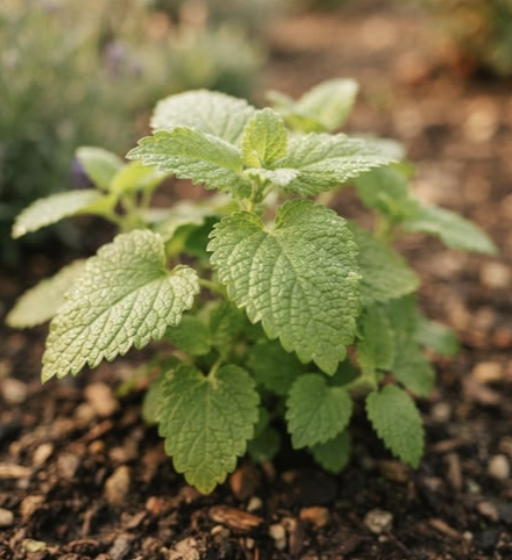

Lemon balm, or Melissa officinalis, has a long history of use as a medicinal herb and has become a popular botanical ingredient for people looking for additional support for cold sores and herpes simplex virus (HSV).
A member of the mint family, lemon balm contains several biologically active compounds, including phenolic compounds such as rosmarinic acid, that have attracted scientific interest for their potential antiviral properties.¹,²
What makes lemon balm particularly interesting for HSV is that researchers have investigated it from several different angles.
Laboratory studies suggest certain lemon balm extracts may interact directly with HSV and interfere with the virus’s ability to attach to and penetrate host cells.¹,² Even more importantly, lemon balm is one of the botanicals for which we also have some human clinical research examining its topical use for recurrent cold sores.⁴
So what does the research actually tell us?
Much of the interest in lemon balm and HSV comes from laboratory research examining extracts of Melissa officinalis and their individual constituents.
In one study, researchers tested an aqueous lemon balm extract and several phenolic compounds; including caffeic acid, p-coumaric acid, and rosmarinic acid; against HSV-1.¹
The researchers found that lemon balm extract demonstrated virucidal activity against HSV-1 under laboratory conditions, meaning the extract interacted directly with free viral particles and reduced their infectivity.¹
The extract also inhibited the ability of HSV-1 to attach to host cells in a dose-dependent manner. Rosmarinic acid appeared to contribute substantially to this activity, although the complete lemon balm extract demonstrated stronger antiviral selectivity than the individual compounds tested.¹
This is an interesting finding because it suggests that lemon balm’s activity may not depend on just one isolated constituent.
HSV causes both oral and genital herpes.
HSV-1 is most commonly associated with cold sores around the mouth, although it can also cause genital infections. HSV-2 more commonly causes genital herpes.
Once someone acquires HSV, the virus establishes latency within sensory nerve cells and can periodically reactivate.
This ability to remain dormant is one reason HSV can be difficult to manage.
Researchers investigating lemon balm have focused particularly on what happens during the early stages of viral infection.
Before HSV can infect a healthy cell, the virus must first attach to the cell surface and then penetrate the cell.
Laboratory research suggests lemon balm may interfere with both of these processes.¹,²
A 2014 laboratory study investigated lemon balm extract against both acyclovir-sensitive HSV-1 and clinical isolates of acyclovir-resistant HSV-1.²
Researchers found that lemon balm extract interacted directly with free viral particles and inhibited HSV attachment to host cells.²
The extract also inhibited viral penetration into cells under laboratory conditions.²
Interestingly, when the extract was added after HSV had already entered infected cells, researchers did not observe the same antiviral effect.²
That finding gives us a more specific picture of how lemon balm may work:
Its antiviral activity appears to be particularly relevant during the early stages of infection, before or while HSV is attaching to and entering a host cell.¹,²
Other laboratory research examining aqueous extracts from plants in the mint family has similarly demonstrated antiviral activity against HSV-1, HSV-2, and an acyclovir-resistant HSV-1 strain.³
Research specifically examining HSV-2 has also found antiviral effects from lemon balm extracts in cell culture, although the proposed mechanism has varied depending on the preparation and experimental model studied.⁷
Together, these studies suggest that Melissa officinalis contains compounds with anti-HSV activity under laboratory conditions.
The finding that lemon balm has demonstrated activity against acyclovir-resistant HSV in vitro is particularly interesting.
Acyclovir and related antiviral medications work through mechanisms that are different from those proposed for lemon balm extracts.
In laboratory research, lemon balm extract inhibited attachment and penetration of both acyclovir-sensitive and acyclovir-resistant HSV-1 strains.² This suggests its antiviral activity does not depend on the same viral pathway targeted by acyclovir.
Lemon balm has also been studied for something seemingly separate from its antiviral activity:
stress and sleep.
This is relevant because stress is commonly reported as a trigger for recurrent HSV outbreaks.
In a randomized, double-blind, placebo-controlled crossover study involving healthy adults exposed to laboratory-induced stress, a standardized lemon balm extract was associated with increased self-rated calmness at one of the doses tested.⁵
Other controlled human studies have also investigated lemon balm supplementation for anxiety, stress, and sleep.
For example, an 8-week double-blind, placebo-controlled trial found improvements in measures of anxiety, stress, depression, and sleep disturbance among patients with chronic stable angina receiving lemon balm compared with placebo.⁶
More recent controlled research has also investigated standardized Melissa officinalis extracts for sleep quality and emotional distress.⁸
These findings provide evidence that lemon balm may influence certain measures related to stress, anxiety, and sleep in some populations.
Perhaps the most clinically relevant research on lemon balm and HSV involves applying it directly to cold sores.
Unlike many botanical ingredients where the HSV evidence remains entirely laboratory-based, topical lemon balm has been evaluated in a randomized human clinical trial.
A double-blind, placebo-controlled, randomized trial evaluated a cream containing 1% standardized dried Melissa officinalis leaf extract in 66 adults with recurrent herpes labialis.⁴
Participants had a history of frequent cold sores and were randomly assigned to use either the lemon balm cream or placebo.
By day two of treatment, the lemon balm group showed a significantly better combined symptom score than the placebo group.⁴
The researchers also reported improvement in individual symptoms, including swelling and redness, and concluded that the standardized lemon balm cream demonstrated efficacy in treating herpes simplex labialis.⁴
This distinction is important.
The human evidence doesn’t tell us that every form of lemon balm will have the same effect.
It tells us that a specific standardized topical preparation demonstrated benefits compared with placebo in a controlled clinical trial.
That’s much more precise, and much more useful, than simply saying lemon balm “treats cold sores.”
Probably.
Lemon balm is available in several forms, including:
These products shouldn’t necessarily be considered interchangeable.
The laboratory studies demonstrating direct anti-HSV activity used specific aqueous or hydroalcoholic extracts under controlled experimental conditions.¹⁻³,⁷
Likewise, the human cold sore trial used a standardized 1% dried lemon balm leaf extract cream.⁴
Drinking lemon balm tea, therefore, should not be assumed to produce the same local antiviral effect demonstrated when a standardized extract is applied directly to a cold sore.
This is an important consideration whenever botanical research is translated into real-world use:
The plant matters, but so do the extract, concentration, dose, and route of administration.


Photodynamic therapy is a treatment typically used in the treatment of acne, warts, and a range of cancers, including mouth (oral), head and neck, lung,

The HPV Infection: Do I Have It? But…I’ve never noticed any symptoms so I couldn’t have gotten an HPV infection? Most strains of HPV are low-risk strains that
Are you worried about HPV? Are you unclear as to what exactly HPV is? We at Papillex understand your concerns. HPV can be scary! That’s
Human beings are naturally programmed to eat foods that are healing and beneficial for our bodies. However, we all know that it isn’t always easy
Check out our shop to see what's available
Easy Delivery. Effortless Wellness.
Subscribe for:
By signing up for a Wellex subscription, you authorize use of the credit card you have on file and shipping at the frequency you have selected. Rest assured you can change or cancel at any time.