
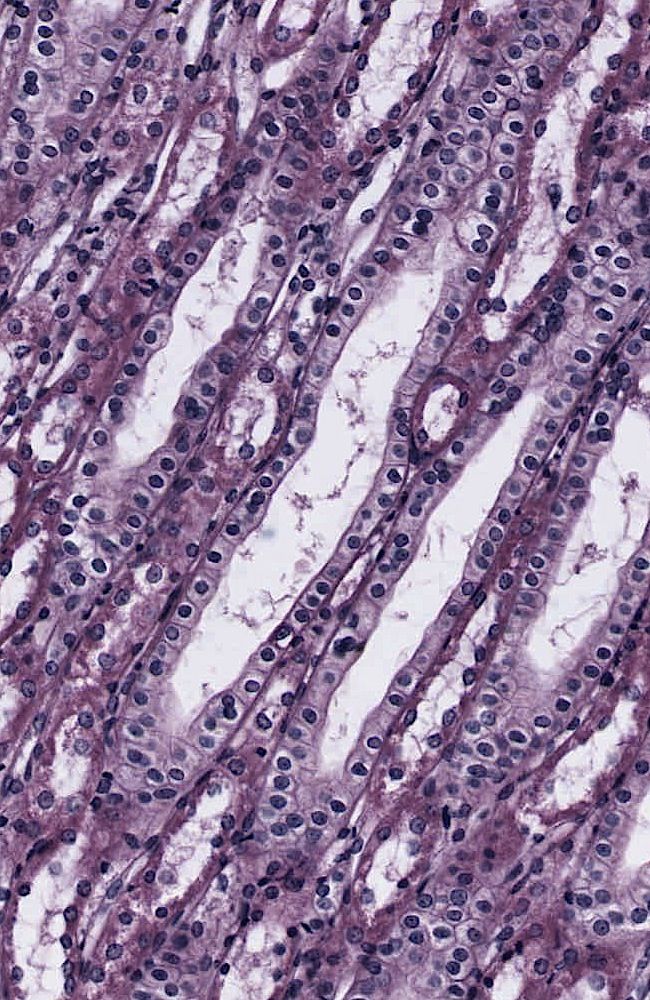

You go for your regularly scheduled cervical screening test, but this time the result says abnormal.
Seeing that word can feel frightening, but an abnormal cervical screening result does not automatically mean that you have cervical cancer. In many cases, it reflects minor cell changes that resolve naturally or can be safely monitored over time.¹˒²
In this article, we explain what epithelial cells are, what an epithelial cell abnormality means, how cervical screening results are classified, and what may happen next.
Epithelial cells form the tissues that cover the outside of the body and line many internal organs, cavities, and passageways. These cells help create a protective barrier between the body and the external environment while also contributing to functions such as absorption, secretion, and immune defence.³
Epithelial tissue is found in areas including the:
Epithelial cells are generally classified by their shape as squamous, cuboidal, or columnar. The cervix contains both squamous and glandular epithelial cells. Most cervical cell abnormalities identified during routine screening involve squamous cells found on the outer surface of the cervix.⁴
An epithelial cell abnormality means that cells collected from the cervix appear different from normal cells when examined under a microscope.
These changes can develop for several reasons, including:
Most abnormal cervical screening results are associated with HPV, particularly persistent infection with a high-risk HPV type. However, an abnormal result alone does not confirm precancer or cancer.¹˒⁵
The term cervical dysplasia is often used to describe abnormal cervical cell growth. Dysplasia is not cancer, but some higher-grade abnormalities can progress if they are not monitored or treated appropriately.¹˒⁶
A Pap test, also called cervical cytology, collects a small sample of cells from the cervix. The cells are then examined under a microscope for abnormalities that may indicate precancerous or cancerous changes.⁴
The test is named after Dr George Papanicolaou, whose work helped establish cervical cytology as a method of detecting cervical cancer at an earlier and more treatable stage.⁷
Cervical screening has significantly reduced cervical cancer incidence and mortality by allowing abnormal cells to be identified and managed before they progress to invasive cancer.⁸
Many screening programs are now transitioning from Pap testing alone to primary HPV testing, which looks for high-risk HPV types that can cause cervical cell changes. HPV testing is more sensitive than cytology for detecting cervical precancer.⁹
In Ontario, primary HPV testing became the standard cervical screening method in 2025. Most people with a cervix who are eligible for screening are now screened every five years rather than receiving a Pap test every three years. Screening recommendations vary by province, country, medical history, and previous results.
Cervical screening results may be reported as:
No high-risk HPV or abnormal cervical cell changes were identified, depending on the type of test performed.
The laboratory could not properly assess the sample. This may happen if too few cells were collected or if blood, inflammation, or another substance obscured the sample. Repeat testing may be recommended.¹
Abnormal cervical cells or a high-risk HPV infection were identified. The recommended follow-up depends on the exact result, HPV type, age, previous screening history, and estimated risk of developing a significant cervical lesion.¹˒²
Modern guidelines do not manage every abnormal result in the same way. Instead, follow-up is increasingly based on a person’s combined current and previous results and their estimated risk of cervical intraepithelial neoplasia grade 3 or worse.¹˒²
ASC-US is one of the most common abnormal cervical cytology findings. It means that some squamous cells look slightly unusual, but the changes are not clearly precancerous.
ASC-US may be associated with HPV, inflammation, irritation, hormonal changes, or another benign cause. Follow-up may involve HPV testing, repeat screening, or colposcopy depending on the individual’s age and previous results.¹˒⁴
Atypical glandular cells, or AGC, are abnormalities involving cells from the cervical canal or uterine lining.
Because glandular abnormalities may occasionally be associated with significant cervical or endometrial disease, additional evaluation is generally recommended. This may include colposcopy, sampling of the cervical canal, and, for some individuals, evaluation of the uterine lining.¹
LSIL means that mild changes are present in the cervical squamous cells. These changes are usually associated with HPV infection and often regress naturally, particularly in younger people.⁴˒⁶
LSIL is a cytology result and is not exactly the same as CIN 1, which is a diagnosis made from a tissue biopsy. However, LSIL cytology frequently corresponds with low-grade histologic changes such as CIN 1.⁴
ASC-H means that abnormal squamous cells are present and that a high-grade lesion cannot be ruled out.
Because ASC-H carries a higher risk of significant cervical precancer than ASC-US, colposcopy is generally recommended.¹
HSIL indicates cervical cell changes that have a greater likelihood of representing moderate or severe precancer.
HSIL is commonly associated with histologic CIN 2 or CIN 3, although a biopsy is needed to determine the exact tissue diagnosis. HSIL is not the same as cervical cancer, but prompt evaluation is important because untreated high-grade lesions have a greater risk of progression.¹˒⁴
Adenocarcinoma in situ, or AIS, is a precancerous abnormality involving glandular cells of the cervix.
AIS has the potential to progress to invasive adenocarcinoma and usually requires diagnostic excision and careful follow-up.¹
A cytology result suspicious for or consistent with squamous cell carcinoma means that malignant-appearing squamous cells were identified.
This requires prompt diagnostic evaluation. A screening result alone may raise strong concern, but the final diagnosis is generally confirmed through colposcopy, biopsy, imaging, and other appropriate testing.¹
Cervical intraepithelial neoplasia, or CIN, is a histologic diagnosis made after a cervical tissue sample is examined by a pathologist.
A Pap test or cervical cytology result does not directly diagnose CIN. CIN is usually identified through a biopsy taken during colposcopy.¹
CIN is divided into three grades:
CIN 1 represents mild, low-grade cervical changes involving approximately the lower third of the cervical epithelium.
Most CIN 1 lesions regress naturally without treatment. A systematic review found that approximately 60% of conservatively managed CIN 1 lesions regressed, while progression to cervical cancer was very rare.⁶
CIN 2 represents moderate abnormal changes.
Some CIN 2 lesions regress, particularly in younger individuals, while others persist or progress. Management may involve treatment or careful observation depending on age, pregnancy plans, HPV status, the visibility of the lesion, and the ability to attend regular follow-up.¹˒⁶
CIN 3 represents severe precancerous changes involving most or all of the thickness of the cervical epithelium.
CIN 3 is not invasive cervical cancer, but it carries a meaningful risk of progression if left untreated. Treatment is therefore generally recommended.¹˒⁶
Natural-history evidence shows that regression is common with CIN 1 and possible with CIN 2, while CIN 3 is more likely to persist and requires more active management.
An HPV test looks for high-risk types of human papillomavirus associated with cervical precancer and cancer.
Persistent high-risk HPV infection is the primary cause of cervical cancer. However, testing positive for HPV does not mean that you have cancer. Most HPV infections are controlled or cleared by the immune system within one to two years.⁵
HPV testing may be used:
Some tests can identify HPV 16 and HPV 18 separately because these types are associated with a particularly high proportion of cervical cancers.⁵
Screening recommendations depend on where you live and your personal medical history.
In Ontario, most eligible average-risk people with a cervix between ages 25 and 69 are now screened with an HPV-based cervical screening test every five years. People with previous abnormal results, immunosuppression, symptoms, or a history of cervical precancer may require a different schedule.
Screening is intended for people without symptoms. Contact a healthcare provider rather than waiting for routine screening if you experience symptoms such as:
An abnormal result does not always mean that you will be referred directly for colposcopy.
Depending on your results and medical history, your healthcare provider may recommend:
Current management is based on the estimated risk of developing CIN 3 or cancer rather than on a single test result alone. Some lower-risk abnormalities can be safely monitored, while higher-risk results require colposcopy or treatment.¹˒²
A colposcopy is a procedure that allows a trained healthcare provider to examine the cervix using a magnifying instrument called a colposcope.
The colposcope remains outside the body. A speculum is inserted, similar to a cervical screening appointment, and solutions may be applied to the cervix to help highlight abnormal areas.
Small tissue samples may be taken and sent to a laboratory. The biopsy results determine whether CIN or another abnormality is present and help guide further management.¹
Not every cervical abnormality requires treatment. Lower-grade changes may be monitored because many regress naturally. Higher-grade lesions are more likely to require treatment.¹˒⁶
Treatment options may include excisional or ablative procedures.
LEEP, also called large loop excision of the transformation zone, uses a thin electrically heated wire loop to remove abnormal cervical tissue.
LEEP allows the tissue to be examined by a pathologist and is commonly used to treat high-grade CIN.¹˒¹⁰
A cone biopsy removes a cone-shaped portion of cervical tissue.
It may be recommended when glandular abnormalities are suspected, when the abnormal area extends into the cervical canal, or when a larger diagnostic specimen is required.¹
Ablative treatments destroy abnormal tissue rather than removing it for laboratory examination.
Examples include:
The appropriate procedure depends on the grade, size, location, and visibility of the lesion, whether cancer can be excluded, the person’s reproductive goals, and local clinical guidelines.¹˒¹⁰
Systematic reviews indicate that LEEP, cryotherapy, and cold-knife conization can all be effective in appropriately selected patients, although their risks, recurrence rates, and effects on future pregnancy differ.¹⁰˒¹¹
No food, herb, supplement, or lifestyle strategy has been proven to cure HPV or replace medical follow-up.
However, healthy habits support normal immune function and overall health while your healthcare provider monitors or treats cervical abnormalities.
Helpful habits may include:
Smoking is associated with a higher risk of persistent HPV infection and cervical precancer, making smoking cessation particularly important.¹²
Supplements should not be described as treatments that eradicate HPV or reliably return abnormal cervical cells to normal.
Certain vitamins, minerals, and botanical ingredients contribute to normal immune function or are being studied in relation to HPV and cervical health. However, the evidence is not strong enough to guarantee viral clearance or regression of cervical abnormalities.
Papillex® was formulated with vitamins, minerals, and botanical ingredients selected to support normal immune function and help address nutritional gaps. It should be used as part of a broader health plan and not as a replacement for cervical screening, colposcopy, biopsy, treatment, or other medical care.
Always speak with a qualified healthcare provider before beginning a new supplement, particularly if you are pregnant, breastfeeding, taking medication, or undergoing treatment for a cervical abnormality.
An epithelial cell abnormality means that cells collected from the cervix appear different from normal cells. It does not automatically mean that you have cervical cancer.
Many low-grade abnormalities regress naturally, while higher-grade findings require closer evaluation and may need treatment. The appropriate next step depends on your HPV results, cytology findings, biopsy results, previous screening history, age, and overall risk.
The most important thing you can do is attend all recommended follow-up appointments and discuss your individual results with your healthcare provider.


Photodynamic therapy is a treatment typically used in the treatment of acne, warts, and a range of cancers, including mouth (oral), head and neck, lung,

The HPV Infection: Do I Have It? But…I’ve never noticed any symptoms so I couldn’t have gotten an HPV infection? Most strains of HPV are low-risk strains that
Are you worried about HPV? Are you unclear as to what exactly HPV is? We at Papillex understand your concerns. HPV can be scary! That’s

Human beings are naturally programmed to eat foods that are healing and beneficial for our bodies. However, we all know that it isn’t always easy
Check out our shop to see what's available
Easy Delivery. Effortless Wellness.
Subscribe for:
By signing up for a Wellex subscription, you authorize use of the credit card you have on file and shipping at the frequency you have selected. Rest assured you can change or cancel at any time.