

For years, creatine was marketed almost exclusively to male athletes and bodybuilders. But emerging research suggests that creatine may offer unique benefits for women across multiple stages of life; from supporting exercise performance and recovery to cognitive function, healthy aging, and even hormonal transitions.¹⁻³
Women naturally store and metabolize creatine differently than men. Research suggests women generally have lower dietary creatine intake and lower endogenous creatine synthesis rates, which may make supplementation particularly relevant for female health and performance.²
As interest in strength training, longevity, and metabolic health continues to grow, creatine is becoming one of the most researched and evidence-backed supplements for women.
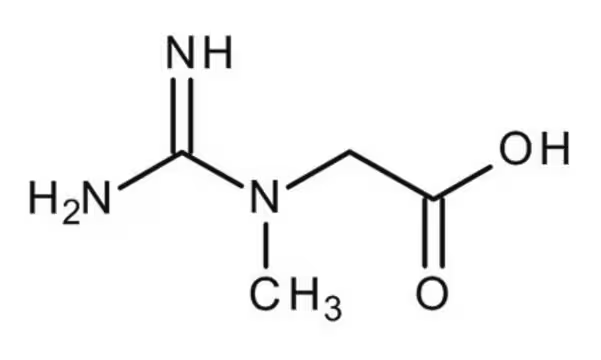
Creatine is a naturally occurring compound made from the amino acids glycine, arginine, and methionine. The body produces approximately 1 gram per day, primarily in the liver, kidneys, and pancreas, and additional creatine is obtained through foods such as red meat and fish.¹
About 95% of the body’s creatine is stored in skeletal muscle, where it helps regenerate adenosine triphosphate (ATP): the body’s primary source of cellular energy.¹
During short bursts of high-intensity activity, creatine helps replenish energy stores more quickly, allowing muscles and other tissues to perform more efficiently. This is why creatine has long been used to support strength, power, and exercise performance.¹
While creatine has traditionally been studied in male athletes, newer research highlights several reasons women may uniquely benefit from supplementation.
Women appear to have:
Researchers have proposed that creatine may support women differently across the lifespan, including during menstruation, pregnancy, perimenopause, and postmenopause.³
One of the most well-established benefits of creatine is its ability to improve strength and high-intensity exercise performance.¹
Creatine increases phosphocreatine stores within muscle tissue, helping regenerate ATP during demanding exercise. This may support:
Research in women has demonstrated similar benefits. In a study of collegiate female athletes, women who supplemented with creatine during resistance training experienced significantly greater improvements in upper-body strength compared with placebo.⁴
Importantly, creatine does not directly build muscle on its own. Rather, it may help support the quality and intensity of training, which can contribute to gains in lean muscle mass over time when combined with resistance exercise.¹,³
Hormonal fluctuations throughout the menstrual cycle influence energy metabolism, recovery, hydration status, and fatigue perception.
Emerging evidence suggests creatine supplementation may help support energy availability during phases of the cycle where fatigue is more common, particularly the luteal phase.¹
Researchers have reported that women may experience reductions in fatigue following high-intensity exercise during the luteal phase when supplementing with creatine.¹
Recent studies have also shown that creatine may positively influence cellular hydration and fluid balance across the menstrual cycle, potentially supporting overall performance and recovery.³
Although more research is needed, these findings suggest creatine may offer benefits that extend beyond athletic performance alone.
Creatine is not only stored in muscle; it is also found in the brain.
The brain requires large amounts of ATP to support memory, attention, learning, and mental performance. Because creatine plays a central role in energy metabolism, researchers have explored its potential impact on cognitive function.¹
Studies suggest creatine supplementation may help support:
Some research also suggests women may experience unique cognitive benefits due to hormonal influences on brain energy metabolism.³
While further research is ongoing, creatine’s role in supporting cellular energy production makes it an intriguing tool for long-term brain health.
Mood changes and mental fatigue can occur throughout various hormonal transitions, including menstruation, postpartum recovery, and menopause.
Researchers have increasingly investigated creatine’s potential role in supporting mental health due to its effects on brain energy metabolism.³
Emerging evidence suggests creatine supplementation may help improve mood and may even enhance responses to certain depression treatments when used alongside standard care.³
Although creatine is not a treatment for mental health conditions, researchers continue to explore its role as a supportive nutritional strategy for cognitive and emotional well-being.
After menopause, women experience accelerated declines in estrogen, muscle mass, strength, and bone density.
These changes can contribute to:
Research suggests creatine supplementation combined with resistance training may help support muscle mass, strength, and bone health in postmenopausal women.³
Some studies have also reported improvements in functional capacity and physical performance in older women who supplemented with creatine alongside exercise programs.³
For women focused on healthy aging, maintaining muscle and strength is one of the most important factors for long-term mobility and quality of life.
Creatine monohydrate is one of the most extensively studied dietary supplements available.
Current evidence indicates that creatine supplementation is safe for healthy women when used as directed.¹,³
Common misconceptions include concerns about kidney damage, dehydration, or significant water retention. However, long-term studies have not demonstrated harmful effects on kidney function in healthy individuals using recommended doses.¹
Some women may notice a temporary increase in body weight during the initial stages of supplementation due to increased intracellular water retention. This reflects increased muscle hydration rather than body fat gain.¹
As with any supplement, individuals with underlying medical conditions or those who are pregnant should consult their healthcare provider before beginning supplementation.
The most studied and recommended form is creatine monohydrate.¹
Common evidence-based approaches include:
3–5 grams per day
20 grams per day divided into four 5-gram servings for 5–7 days, followed by 3–5 grams daily¹,³
A loading phase is not required and may increase the likelihood of temporary bloating or gastrointestinal discomfort. Many women choose a consistent daily dose of 3–5 grams, which gradually increases muscle creatine stores over several weeks.¹
Consistency is more important than timing.
No. Creatine does not directly cause large increases in muscle size. It may support strength, recovery, and lean muscle development when combined with training, but it does not create the hormonal environment associated with significant muscle hypertrophy.
Creatine monohydrate is the most researched and widely recommended form of creatine. It has been extensively studied for its safety, effectiveness, and absorption, making it the preferred choice for most people.
Some women may experience temporary increases in body weight due to increased water retention within muscle cells. This is different from gaining body fat.¹ Weight gain and bloating are more commonly reported with high-dose loading protocols, which are not necessary for most people. Any increase in body weight may also reflect gains in lean muscle mass when combined with resistance training.
Yes. Research supports daily supplementation, and consistent intake appears to be the most effective strategy for maintaining creatine stores.¹,³
No. Research is increasingly exploring creatine’s role in cognitive health, aging, recovery, and overall wellness, making it relevant beyond athletic populations.¹,³
Creatine is no longer just a supplement for athletes.
Research suggests it may support strength, recovery, cognitive function, mood, and healthy aging in women across multiple stages of life.¹⁻³
While more women-specific research is still needed, current evidence indicates that creatine monohydrate is a safe, effective, and well-studied supplement that may offer benefits extending far beyond the gym.


Photodynamic therapy is a treatment typically used in the treatment of acne, warts, and a range of cancers, including mouth (oral), head and neck, lung,

The HPV Infection: Do I Have It? But…I’ve never noticed any symptoms so I couldn’t have gotten an HPV infection? Most strains of HPV are low-risk strains that

Are you worried about HPV? Are you unclear as to what exactly HPV is? We at Papillex understand your concerns. HPV can be scary! That’s

Human beings are naturally programmed to eat foods that are healing and beneficial for our bodies. However, we all know that it isn’t always easy
Check out our shop to see what's available
Easy Delivery. Effortless Wellness.
Subscribe for:
By signing up for a Wellex subscription, you authorize use of the credit card you have on file and shipping at the frequency you have selected. Rest assured you can change or cancel at any time.