
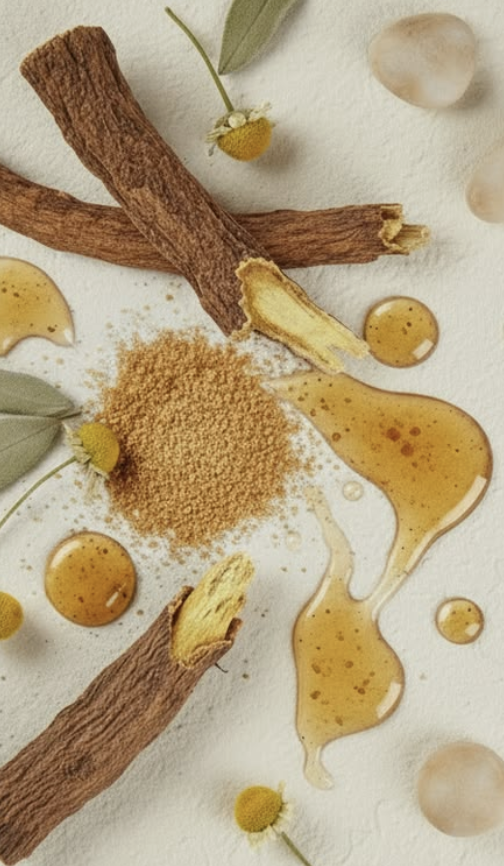

Licorice root (Glycyrrhiza glabra) has been used in traditional medicine for thousands of years and continues to be one of the most widely researched medicinal herbs today. While many people recognize it for soothing digestive complaints, licorice root has also been studied for its antiviral, anti-inflammatory, and immune-supportive properties.¹
One of the herb’s primary active compounds, glycyrrhizin (also called glycyrrhizic acid), has attracted interest for its potential role in managing herpes simplex virus (HSV), the virus responsible for cold sores (HSV-1) and most cases of genital herpes (HSV-2).¹
Licorice root has traditionally been used to support a variety of health concerns, including:
The herb contains hundreds of naturally occurring compounds, but glycyrrhizin is considered one of its best-studied active constituents.¹
Because glycyrrhizin can increase blood pressure in some individuals when taken in high amounts or for prolonged periods, deglycyrrhizinated licorice (DGL) is often used in digestive health supplements. DGL has most of the glycyrrhizin removed, making it a different preparation with different clinical uses.⁴
Research suggests licorice root may have several properties that could be beneficial for HSV, although **most of the evidence comes from laboratory and animal studies rather than large human clinical trials.**¹,²
Laboratory studies have found that glycyrrhizin may interfere with several stages of the HSV life cycle. Researchers have observed that it may help reduce viral replication, decrease the virus’s ability to infect healthy cells, and limit viral activity under experimental conditions.²
While these findings are encouraging, they do not necessarily mean licorice root alone can prevent or treat HSV outbreaks in people.
Licorice root also appears to influence immune function by helping regulate inflammatory pathways and supporting the activity of several immune cells.³
Because HSV remains dormant in nerve cells and can reactivate when immune defenses are compromised, supporting overall immune health may play an important role in reducing recurrent outbreaks. However, licorice root should be viewed as one piece of a comprehensive management plan rather than a standalone treatment.
Many people notice HSV outbreaks occur during periods of illness, poor sleep, or psychological stress.
Licorice root has traditionally been used to support the body’s response to stress, and some research suggests it may influence the body’s stress-response systems.³ Since stress is a well-recognized trigger for HSV reactivation, lifestyle habits that reduce chronic stress remain an important part of outbreak prevention.
Licorice root has a long history of traditional use and is generally considered safe **when used appropriately and under the guidance of a qualified healthcare practitioner.**⁴
However, glycyrrhizin-containing licorice can cause side effects when taken in high doses or over long periods, including:
Licorice root may not be appropriate if you:
Always speak with your healthcare provider before starting licorice root, especially if you have underlying medical conditions or take prescription medications.
Licorice root is one of the most extensively studied medicinal herbs, and its active compound, glycyrrhizin, has demonstrated antiviral activity against HSV in laboratory research. It may also help support healthy immune function and inflammation, which are important factors in HSV management.¹–³
While the early evidence is promising, human clinical trials remain limited. Licorice root should be considered a complementary strategy alongside evidence-based treatments, healthy lifestyle habits, and guidance from a qualified healthcare practitioner.


Photodynamic therapy is a treatment typically used in the treatment of acne, warts, and a range of cancers, including mouth (oral), head and neck, lung,

The HPV Infection: Do I Have It? But…I’ve never noticed any symptoms so I couldn’t have gotten an HPV infection? Most strains of HPV are low-risk strains that
Are you worried about HPV? Are you unclear as to what exactly HPV is? We at Papillex understand your concerns. HPV can be scary! That’s

Human beings are naturally programmed to eat foods that are healing and beneficial for our bodies. However, we all know that it isn’t always easy
Check out our shop to see what's available
Easy Delivery. Effortless Wellness.
Subscribe for:
By signing up for a Wellex subscription, you authorize use of the credit card you have on file and shipping at the frequency you have selected. Rest assured you can change or cancel at any time.